


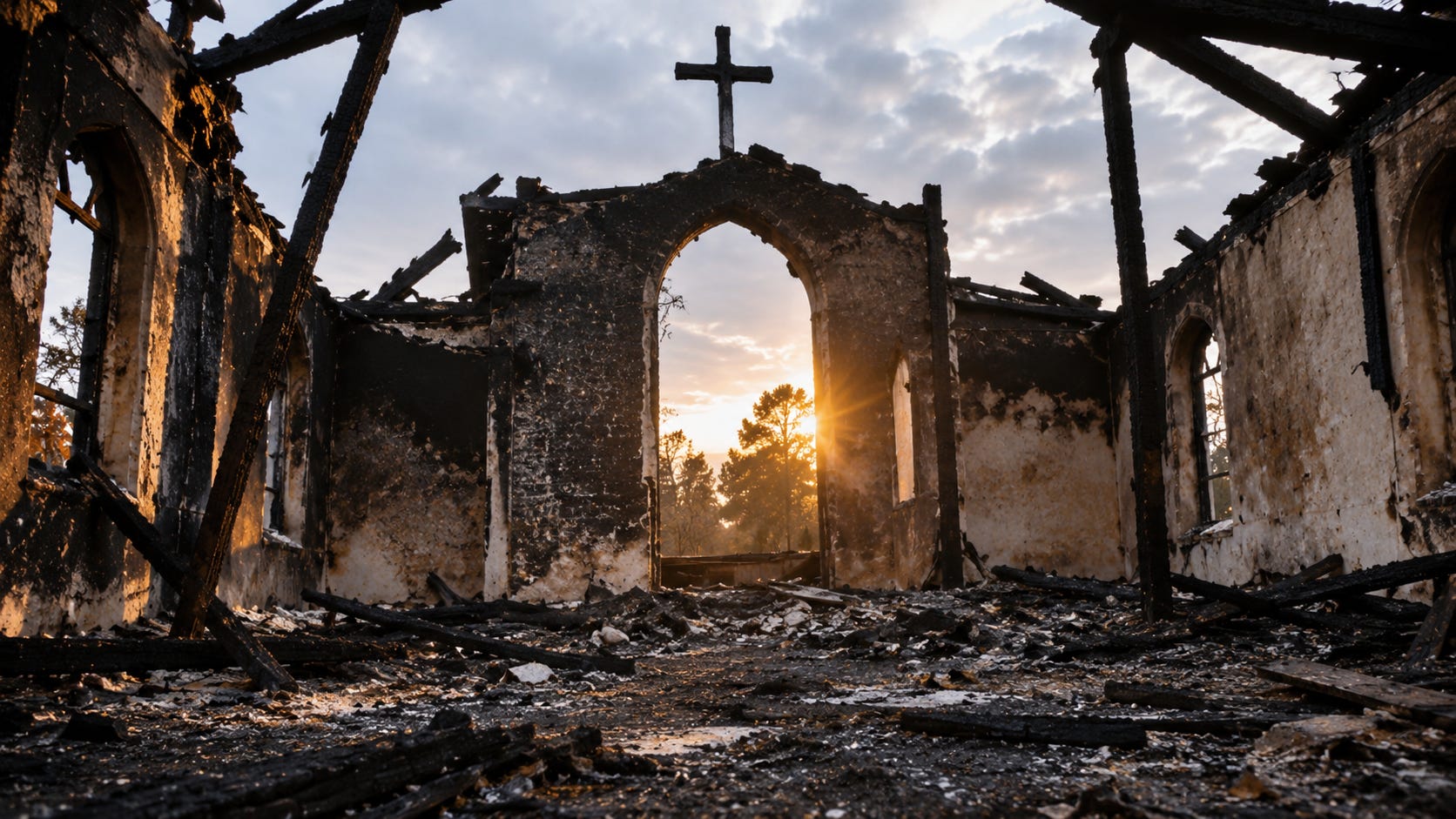
Our brothers and sisters are suffering for their faith. We have voices, churches, and opportunities to help. What are we going to do with them?
I've spent some time researching organizations that are actively working to protect persecuted Christians, especially in Africa. The more I've looked into this, the more convinced I've become that we need to be doing something.
I keep hearing the same question whenever Christian persecution comes up.
"What can we actually do about it?"
It's a fair question. Most of us aren't in a position to travel to these places. We can't personally intervene in every conflict, protect every Christian community, or change the decisions of foreign governments.
But does that mean we're helpless? Does it mean we simply acknowledge what's happening, offer a prayer, and move on with our day?
I don't believe it does.
And I don't believe that's what Christ calls us to do.
Love Requires Something of Us
The Apostle John gives us a pretty clear instruction.
"Let us not love in word or in tongue, but in deed and in truth." (1 John 3:18)
I've been coming back to that verse quite a bit.
It's easy to say we love our brothers and sisters in Christ. We pray for the Church. We talk about the unity of believers. We acknowledge that Christians around the world are part of the same Body of Christ.
But what happens when members of that Body are suffering?
What does our love look like then?
I don't ask that as someone who has all the answers. I certainly don't. I'm still learning about the extent of Christian persecution around the world, and I'm realizing how much I haven't paid attention to over the years.
That bothers me.
There are people suffering for the very faith I have the freedom to practice. And here I am, going about my ordinary day, often unaware of what they're enduring.
I can't change what I didn't know yesterday. But I can take responsibility for what I know today.
And I think that's where we need to begin.
There Are Organizations Already Doing the Work
One of the things I wanted to accomplish with my research was to identify legitimate organizations that people could support with some confidence.
I wasn't interested in simply collecting names or sharing organizations because they had Christian-sounding missions. I wanted to find groups with strong accountability ratings and work relevant to protecting vulnerable people.
The following eight organizations have received four-star ratings from Charity Navigator:
Some of these organizations are Christian. Others are secular.
I think that's worth mentioning because the suffering of Christians doesn't suddenly become less important when the organization helping them isn't explicitly Christian.
These organizations have work relevant to protecting vulnerable people, documenting atrocities, advocating for human rights, or providing humanitarian assistance.
Their four-star Charity Navigator ratings reflect organizational accountability. That doesn't guarantee results, and it doesn't mean every organization approaches every issue the same way.
We should still do our homework.
But these are organizations worth looking into if we genuinely want to move beyond talking about persecution and begin supporting those working to address human suffering.
We can contribute financially when we're able. We can share their findings. We can help bring attention to what is happening.
And for those who can't afford to give money, there are still meaningful ways to help.
Start With Your Own Church
I believe this is one of the most important places we can begin.
Talk with your priest, pastor, or church leadership.
Ask what your parish or congregation is doing to support persecuted Christians. If nothing is currently being organized, ask whether something could be.
Maybe your church could organize a collection for a reputable relief organization. Maybe it could begin sharing verified information with the congregation. Perhaps the persecuted Church could become a regular part of your community's prayers and outreach.
These are reasonable things to ask.
We gather together every week as Christians. We worship the same Lord. We confess the same Christ who calls us to love one another.
Surely we can find room in the life of our churches to remember those who suffer for His name.
And I want to be careful here because I don't believe every congregation has to respond in exactly the same way. Churches have different resources, responsibilities, and opportunities.
But I do believe we should be having these conversations.
If we're serious about being one Body in Christ, the suffering of other members of that Body should concern us.
Their suffering should matter to us even when it happens far away, even when we don't know their names, and even when the situation is complicated.
Our Elected Leaders Need to Hear From Us
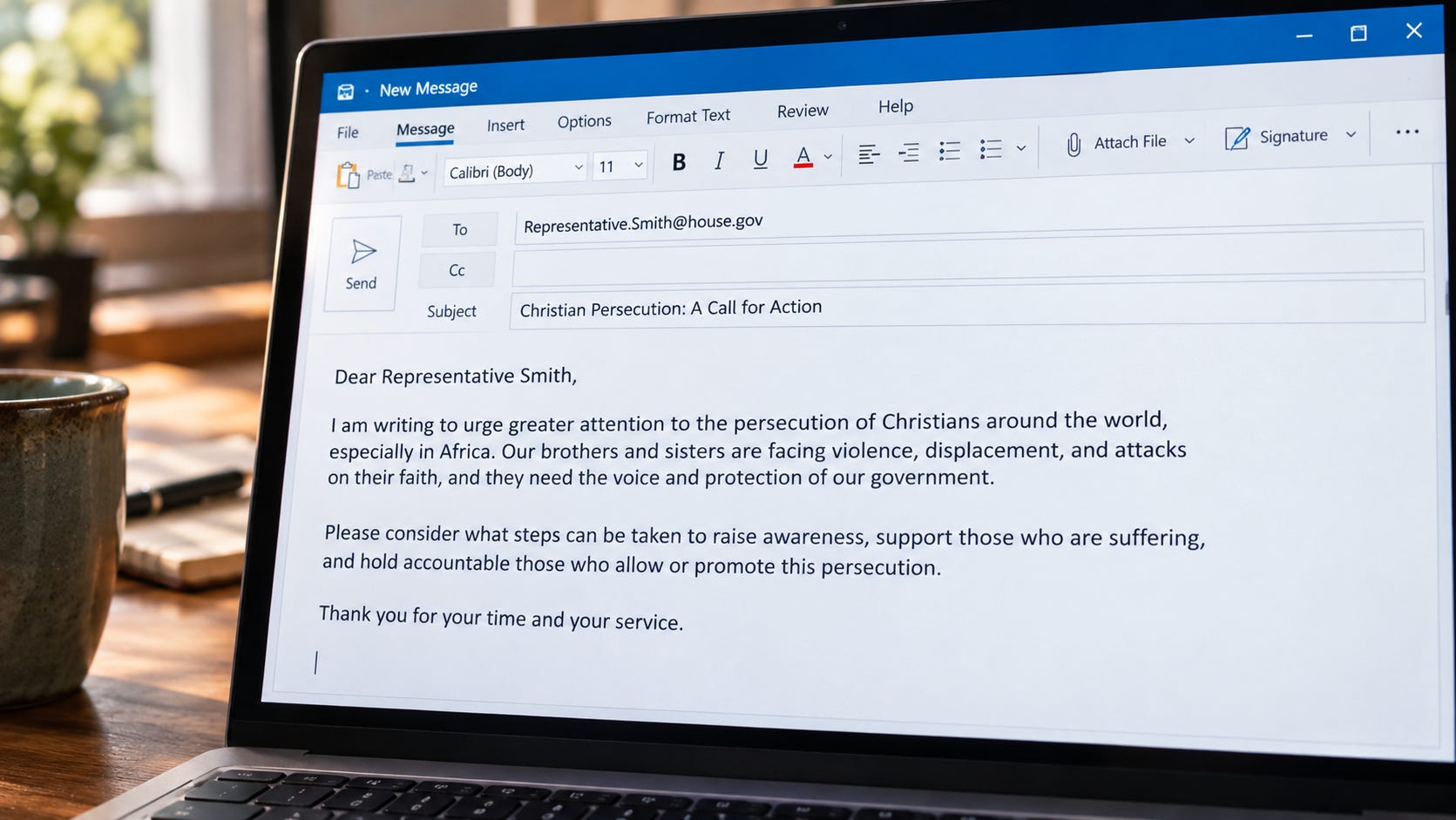
Another thing we can do is contact our elected representatives and government leaders.
I know some people are tired of politics. I understand that.
But this is about human lives and the responsibility of governments to protect vulnerable people.
We should be asking our representatives to publicly acknowledge the persecution of Christians, call for meaningful action, and press foreign governments to protect communities facing violence and oppression.
We should also demand accountability for those responsible for atrocities.
Our elected leaders are supposed to represent us.
How will they know this matters to their constituents if they never hear from us?
Write a letter. Send an email. Make a phone call.
If you live in the United States, you can find your representative, your senators, and your governor at these official pages:
These links are for US residents, but I urge citizens of other countries to do the same, and contact the leaders who represent you.
You can also write to an ambassador. You can find the U.S. ambassador for any country through the Department of State: Find a U.S. Embassy.
Write to the U.S. ambassador in that country. Explain your concerns about Christian persecution, identify specific incidents or patterns of violence, and ask what the U.S. Embassy is doing to address religious freedom and protect vulnerable communities.
Write to the foreign country’s ambassador to the United States. This allows you to address concerns directly to a representative of that government and request information about measures being taken to protect Christians.
Contact the U.S. State Department’s Office of International Religious Freedom. This office focuses specifically on religious freedom violations around the world.
You don't have to be an expert in international relations to tell your representative that the persecution of Christians deserves attention.
You can ask questions. You can request a response. You can make it clear that this issue matters to you.
Will one letter change everything?
Probably not.
But I don't believe the possibility of limited results excuses us from doing what we can.
We Have to Keep Talking About It
This may be one of the simplest things we can do, and one of the easiest to neglect.
Keep talking about Christian persecution.
Share verified reports. Help others understand what's happening. Bring these concerns into conversations with your church, friends, and family.
And please, check what you're sharing.
We don't help persecuted Christians by spreading information that turns out to be false. We need to be responsible with the information we pass along.
But we also shouldn't allow the fear of getting something wrong to become an excuse for saying nothing.
There is a difference between being careful and being silent.
I believe silence and indifference allow suffering to continue without the attention and accountability it deserves.
And I know how easy it is to become distracted.
We have jobs, families, bills, responsibilities, and problems of our own. Most of us are already carrying more than enough.
I understand that because I'm living it too.
But I keep coming back to the same question.
If these were Christians in my own community, would I respond differently?
Would I be more willing to speak? Would I make time to contact someone? Would I ask my church to help?
If the answer is yes, then I need to examine why distance makes such a difference in my compassion.
Christ never told us that love should stop at the borders of our own communities.
Prayer and Action Belong Together
I want to be very clear about something.
We should absolutely pray for persecuted Christians.
We should pray for their protection, their endurance, their families, and for those who are responsible for their suffering.
Prayer is essential to the Christian life. I would never suggest otherwise.
But I also believe our prayers should shape how we live.
If I ask God to have mercy on someone who is suffering, shouldn't I also be willing to show mercy where I have the opportunity?
If I pray for the protection of persecuted Christians, shouldn't I be willing to speak on their behalf?
That brings me right back to the Apostle John's words.
"Let us not love in word or in tongue, but in deed and in truth." (1 John 3:18)
Those words leave me with something to examine in my own life.
Am I willing to act on the compassion I say I have?
Because I don't want my concern for persecuted Christians to end when I close my computer or move on to the next thing demanding my attention.
Please Share This Information
I want to ask one final thing.
Share the list of organizations above.
Restack this article. Copy and paste the names. Send them to your priest or pastor. Share them with someone who has been asking what they can do.
I don't need recognition for compiling the list. I don't care whether my name stays attached to it.
I care that the information gets into the hands of people who might use it to help someone.
We have organizations already doing the work. We have churches that can organize support. We have elected representatives who need to hear from us. And we have voices that can help keep the suffering of our brothers and sisters from being forgotten.
I don't have all the answers, and I suspect I'll continue discovering how much I don't know.
But I know enough to recognize that doing nothing shouldn't be our default response.
There are things we can do.
I believe we have a Christian responsibility to do them.
So here's my question.
What are we willing to do this week for our brothers and sisters who are suffering for Christ?
I would also love to hear from you in the comments. If you know of organizations you trust, ways you’ve found to help persecuted Christians, or ideas I haven’t considered, please share them. We can learn from one another and hopefully encourage more people to take action.
Grace and Peace,
-Dan